Friday, May 7, 2010

Immigration Reform

The issue of immigration reform, like most modern-day issues, seems to have been split cleanly along party lines.

In the wake of a controversial immigration law passed in Arizona in late April, Democrats are pushing immigration reform on the national agenda. Republicans, however, are holding back. Other issues, such as climate change, may "leave Congress with little time to take on such a controversial matter like immigration." However, I think that, especially after a law like the one in Arizona has been passed, it would behoove Congress to take swift action on immigration reform.

Apparently, the Democrats actually have a plan, dubbed REPAIR for Real Enforcement with Practical Answers for Immigration Reform. It makes an effort to reach out to the Republicans, including methods of securing the border along with giving rights to immigrants who are already here. However, the Republicans continue to be obstructionist.

In fact, Senator Lindsey Graham, the one Republican who tried to work with the Democrats on immigration reform, quit. He "said it's clear that Americans do not think the border with Mexico is secure and will not accept an immigration bill until that's fixed." The Republican strategy here seems to be to completely close the border, then think about the rest of the issue later.

I have to disagree with this strategy, because immigration is a complex issue. Simply closing off the border is not a viable solution, given all the current systems that are in place around illegal immigration (our economy, for one). This issue must be treated delicately, with a complex solution, rather than simply building more walls between us and Mexico.

The Republican Party


In another era, I may have been a Republican.

I support the Republicans traditional values, particularly the rights of the individual. According to the GOP site, "the Republican Party, since its inception, has been at the forefront of the fight for individuals' rights in opposition to a large, intrusive government." In a democracy, it's important to have a voice fighting for the rights of individuals. Our founders, although determined to create a government strong enough to defend itself and lead its people, wrote the Constitution with an emphasis on individual freedoms.

In the past, Republican's have backed progressive movements, such as women's suffrage and the abolition of slavery. According to the GOP site, "In 1896, the Republican Party was the first major political party to support women's suffrage. When the 19th Amendment finally was added to the Constitution, 26 of 36 state legislatures that had voted to ratify it were under Republican control....So it was by hardworking Republican hands that color and gender barriers were first demolished in America." These strides in our development as a country helped us push past damaging prejudices, so I support these efforts by the Republican party.
However, I have a few problems with what the modern day Republicans have become, particularly the more radical ones. First of all, it's hypocritical that Republicans don't support gay marriage, given that they "demolished color and gender barriers" previously, as stated above. It's only natural that the next step would be to abolish prejudice against sexual orientation, so it just doesn't make a lot of sense that the Republicans don't back gay marriage.

This may, in part, be due to the fact that religion is so closely tied to politics with many Republicans. An extreme example, of course, is Sarah Palin, who "has called on people to pray for the cooperation necessary to build a natural gas pipeline across Alaska, labeled the U.S. mission in Iraq a 'task that is from God' and argued that students should be taught the creation account from Genesis in public schools." I am a strong believer in separation of church and state, so I disagree with any arguments that religion should be involved in politics, public schools, or the like.


In addition, recently the Republican's have been called the "party of 'no,'" and not without reason. We saw how Republicans made a disciplined effort to block health care reform, and they appear to be doing the same thing on other issues. This article discusses Senator Lindsey Graham's (R-S.C.) decision to stop working with Senators Kerry and Lieberman on a climate bill. The decision worries supporters of the bill, because, as David Hunter says, "If we don't have bipartisan support, we're not going to have a bill." The United States was structured to pass legislation that has bipartisan support, so the Republicans' refusal to compromise on issues is damaging to the nation.

The Democratic Party


The Democratic party, in recent times, has done a better job of promoting equality and acceptance. According to the Democrat site, "Democrats will fight to end discrimination based on race, sex, ethnicity, national origin, language, religion, sexual orientation, gender identity, age, and disability in every corner of our country, because that's the America we believe in." I agree that if the United States will stand for "liberty and justice for all," they need to stand by that image, not "liberty and justice for some."

I think that, despite the accusations of socialism coming from the Republicans, the Democrats have done a good job of trying to pass legislation that will protect the people, rather than infringing on their rights. For example, health care reform, while not perfect, was much-needed.

However, that legislation comes at a price. Programs for the people need to be paid for somehow, and expenditures and income are currently unbalanced in our national budget. I've posted this video before, but I will do so again, to make my point.


This frightening inability to stabilize the budget is a weakness of the Democrats.

Wednesday, April 7, 2010

Community Service Research Paper: Animal Rights

Part I

The debate over animal rights is an ongoing battle between those who think of animals as equals, those who think of humans as superior in all ways, and those who lie somewhere in between the two. It is a worldwide umbrella issue that covers a multitude of matters relating to both wild and domestic animals.

The sport of animal fighting has been highly publicized lately, particularly in incidents such as Michael Vick’s dog fighting scandal.[1] One recent development worries authorities: the rise of finch fighting. The small birds are cheap, easy to transport and keep, and less likely to attract attention from neighbors and authorities than dogs or cocks. This is concerning to the public, because, as a USA Today article on the subject states, “There may be weapons, there may be drugs, money changes hands, and these are most certainly people who don't think or process or behave like an ordinary person.” [2] In my experience at Avian Rescue Corporation, I’ve had the opportunity to work with three finches, and I can attest that anyone who would want to abuse them for the purpose of entertainment does not view the world normally. The birds are small, flighty, and have beautiful songs; it’s difficult to imagine a community of people centered around two of them fighting to the death.

Another difficult interaction between animals and humans occurs in suburban areas, where wild animal ranges intersect human communities. In this situation, dangers are present for both the humans and animals. Wild predators prey on pets, damage property, and occasionally attack people; suburban development exposes animals to dangers like car accidents and destroys their habitat and food sources. In Wheaton, Illinois, residents were unable to find a peaceful way to coexist with coyotes in the same area and hired trappers to trap and kill the animals.[3] All over the country, similar conflicts are endangering species that have nowhere to live.

Zoos have made efforts to stabilize endangered populations, but the establishment of zoos has been bitterly opposed by organizations such as People for the Ethical Treatment of Animals (PETA). Kathy Guillermo, PETA’s spokesperson, states that the animals’ "...'natural' behavior is controlled by restricted space, companions they did not choose and who may be removed from them at any time and the constant stream of people who leer at them. Their beauty or strangeness may fascinate the public, but their true nature cannot be appreciated because what's on view is not their true nature."[4] However, many zoos have developed programs to educate the public about wild species, breed and rehabilitate endangered species, and treat injured or sick animals, as well as using enclosures designed to imitate the actual habitat of the animal.[5] The debate over whether zoos help or damage wild animal populations appears to have no resolution in the foreseeable future.

The hunting and trafficking of wild animals is a huge problem, particularly in developing countries, where a culture of dependence on and dominance over native species has long been established, and many governments do not have the resources or will to regulate poachers. For example, in Vietnam, nationwide demand for wild meat is about 4,500 tons per year, and in the last two years, authorities have discovered over 7,600 animals being trafficked into the country.[6] In Brazil, 38 million wild animals are captured annually, and 90 percent die in the process of being caught or transported.[7] Traffickers hide animals in secret compartments, tape beaks shut, or combine legal and illegal shipments in order to confuse authorities, making the industry difficult to track. Every bird I’ve seen at Avian Rescue Corporation comes with a story, but Ron Howard, the CEO and my supervisor, told me to take these stories “with a grain of salt.” He explained that although he isn’t looking to arrest anyone or report them to the authorities, many people are too afraid of being prosecuted to tell him the truth about the origin of the birds. A solid percentage of the tropical birds were probably illegally imported. Unfortunately, in many parts of the world, the animal trafficking industry is growing. In Mexico last year, authorities confiscated 110 times as many illegal plants and animals as in 2001.[8] “Trafficking in species is mostly tolerated by society, and that means that the perpetrator is not pursued by the authorities as much as drugs or arms traffickers," says Oscar Moctezuma, director of the Mexican non-governmental group Naturalia.[9]

If supportive public opinion is lacking in countries like Mexico, it seems to be on the upswing in the United States. A series of graphs illustrating responses to a national telephone poll taken in 1995 (see fig. 1) reveals that, in most cases, people side in favor of giving animals certain rights, although it often depends on the “circumstances.”[10] People generally support strict laws protecting animals from inhumane treatment and agree that an animal’s right to live free of suffering is just as important as that of a person. However, many eat meat frequently and think there are circumstances where it’s acceptable to hunt an animal for sport.[11]


Figure 1


One area addressed in the study was animal testing. 62% responded that “the use of animals to test medical treatments is right under some circumstances.”[12] However, there seems to be disagreement as to what constitutes the right circumstances. Animal rights advocates argue that, besides being cruel and unfair to animal subjects, testing for application on humans is often useless. Jerry Vlasak, a Los Angeles surgeon and leader of the North American Animal Liberation Press Office, says, “Half the drugs that test as safe on animals turn out to not work or be safe in people, so you might as well flip a coin.”[13] However, some scientists argue that animal testing has been and continues to be essential to developments in areas such as neuroscience. Many recent Nobel Prize winners have used animal testing in relation to their discoveries (see fig. 2), which makes some people unwilling to sacrifice human health for animal well-being.

Figure 2


Part II

Since the 1950’s, there has been a growing trend in legislation toward giving animals more rights, especially in farm and laboratory settings. In 1958, Congress passed the Humane Slaughter Act, which requires that mammals slaughtered for meat must first be stunned into unconsciousness.[14] The Animal Welfare Act, passed in 1966, includes protection for some non-farm animals, such as those used in research, exhibits, or fighting. Amendments to the Act passed in 1985 require laboratories using animals for research to improve the animals’ housing, allow them regular exercise, and provide them with mental stimulation.[15]

There is also a growing interest in animal law, with about 130 universities offering courses in the subject.[16] Currently, there is little in the law that treats animals as anything more than human property, or, in the case of wild animals, as parts of an ecosystem. However, Kathy Hessler, clinical director of the Center for Animal Law Studies at Lewis & Clark Law School in Portland, Oregon, explains that “some judges are beginning to view a family dog in a divorce case, for example, as a being for whom some form of ‘custody’ is appropriate, as it is for children, rather than as a mere piece of property…but there are also plenty of judges who think this is a bit silly.”[17]

Modern animal rights legislation, which is not a significant priority for the federal government, is mostly being handled by the states, with mixed

results. Last November, 64% of Ohio voters passed Issue 2, which bans voters and the state legislature from passing any standards of treatment for livestock or poultry.[18] By contrast, California passed Proposition 2 in 2008, which requires that farms house calves, hens, and pregnant pigs in enclosures that allow them to lie down, stand up, fully extend their limbs, and turn around freely beginning in 2015. Similar measures were enacted in Arizona, Colorado, Florida, Maine, Michigan, and Oregon.[19] On March 9, Iowa Governor Chet Culver signed a bill into law allowing state inspectors into dog breeding facilities if they receive complaints.[20]


Part III

The only real solution to the animal rights issue is a fundamental shift in public opinion. Once more and more people believe that animals have the right to a healthy, comfortable life, industry will change to reflect that opinion. For example, mink imports to the United States decreased by 30% from 2008 to 2009,[21] a statistic with which some credit PETA’s dramatic anti-fur campaign. Whether PETA or simply cost efficiency is responsible for the shift to faux fur, it is clear that consumer demand lies at the base of the change.

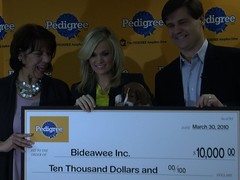
Similarly, animal shelters rely on public support, and have been launching advertising campaigns of their own. Celebrity publicity, such as Carrie Underwood’s recent $10,000 donation to Bideawee Animal Welfare Center,[22] is also directed at raising public awareness of animal shelter conditions. The dedicated people who run shelters and rescue f

acilities can only handle so much pressure. Currently, Avian Rescue Corporation consists of a house stuffed to the brim with what must be hundreds of birds (see fig. 3). Granted, the house is only a temporary setup, but the lack of space is a reminder of what shelters across the country deal with every day. More birds arrive every week for various reasons, and most remain there for a long time before being adopted. Some, because of psychological or physical damage, remain there for life. There are more domestic animals in America than people can take care of, which puts enormous pressure on both the animals and the people who run the shelters. This will only change once people begin to recognize the responsibility that comes with owning or breeding a pet.

Of course, governmental support is a key aspect of this shift. A democratic government, in theory, is expected to reflect the opinion of the people, so a government with strict animal rights legislation is an official statement of the fact that caring for animals is an integral part of society.

In short, the battle for animal rights has a long struggle ahead. Peace has yet to be made between those who acknowledge the critical role that animals play in all of our lives and those who fear that the protection of animals may compromise human welfare. The shift in public opinion will be gradual, because it's unprecedented for an entire society to think of animals as equals. However, the trends that I see in the United States leave me hopeful that, with time, animals will have protection of basic rights, such as the right to live free of suffering, under the law and in the minds of the people.


Figure 3 I sit with Emmy, a Sun Conure parrot
at Avian Rescue Corporation


[1] "Animal Abuse Case Details." Pet-Abuse.Com. N.p., 7 Apr 2010. Web. 7 Apr 2010. .

[2] Peters, Sharon L. "Pet Talk: Animal fighters looking for smaller game turn to finches." USA Today (2010): n. pag. Web. 9 Mar 2010.

[3] Moore, Jerry. "Jerry Moore: Human nature and animal nature need not clash over coyotes." Suburban Life Publications (2010): n. pag. Web. 16 Mar 2010.

[4] Masci, David. "Zoos in the 21st Century." CQ Researcher. 10.16 (2000): 353-376. Print.

[5] Masci, David. "Zoos in the 21st Century." CQ Researcher. 10.16 (2000): 353-376. Print.

[6] "Illegal bush-meat, wildlife trafficking at alarming levels ." Vietnam News. N.p., 22 Mar 2010. Web. 24 Mar 2010.

[7] Colombo, Francesca. "Animal Trafficking - A Cruel Billion-Dollar Business." Inter Press Service (2003): n. pag. Web. 16 Feb 2010.

[8] Colombo, Francesca. "Animal Trafficking - A Cruel Billion-Dollar Business." Inter Press Service (2003): n. pag. Web. 16 Feb 2010.

[9] Colombo, Francesca. "Animal Trafficking - A Cruel Billion-Dollar Business." Inter Press Service (2003): n. pag. Web. 16 Feb 2010.

[10] Masci, David. "Fighting Over Animal Rights." CQ Researcher. 6.29 (1996): 673-696. Print.

[11] Masci, David. "Fighting Over Animal Rights." CQ Researcher. 6.29 (1996): 673-696. Print.

[12] Masci, David. "Fighting Over Animal Rights." CQ Researcher. 6.29 (1996): 673-696. Print.

[13] Clemmitt, Marcia. "Animal Rights." CQ Researcher. 20.1 (2010): 1-24. Print.

[14] Clemmitt, Marcia. "Animal Rights." CQ Researcher. 20.1 (2010): 1-24. Print.

[15] Clemmitt, Marcia. "Animal Rights." CQ Researcher. 20.1 (2010): 1-24. Print.

[16] Clemmitt, Marcia. "Animal Rights." CQ Researcher. 20.1 (2010): 1-24. Print.

[17] Clemmitt, Marcia. "Animal Rights." CQ Researcher. 20.1 (2010): 1-24. Print.

[18] Clemmitt, Marcia. "Animal Rights." CQ Researcher. 20.1 (2010): 1-24. Print.

[19] Clemmitt, Marcia. "Animal Rights." CQ Researcher. 20.1 (2010): 1-24. Print.

[20] Eby, Charlotte. "Culver Signs Puppy Mill Bill." Quad-City Times. N.p., 9 Mar 2010. Web. 9 Mar 2010.

[21] Barnett, Lindsay. "Just how responsible is PETA for a decline in fur sales?." Los Angeles Times. N.p., 30 Mar 2010. Web. 30 Mar 2010.

[22] Kyle, Tara. "Carrie Underwood Donates $10,000 to Midtown Animal Shelter." DNA Info. N.p., 30 Mar 2010. Web. 30 Mar 2010.

Tuesday, March 30, 2010

Simply Adorable


Decline in Mink Imports


An article about PETA's anti-fur campaign mentioned a statistic that I found heartening.

It said, "Mink imports to the U.S. decreased by 30% in 2009 from 2008 levels."

However, the article failed to draw conclusive results as to whether and how much PETA was responsible for the decline. I suspect that they were at least partially responsible, but there were a number of other factors involved, including improvements in the production of faux fur.

Whatever the reasons behind it, I find the decrease in mink imports to be a hopeful sign of public awareness and action.

Animal Sanctuary in Colombia


The animals housed at Ana Julia Torres's Villa Lorena sanctuary in Colombia are "rescued largely from drug traffickers and paramilitary warlords, as well as from circuses and animal-smuggling rings," a New York Times article states.

Each animal has a unique story, and together they provide insight into the abuse associated with drug wars in that country. To further complicate matters, authorities are currently operating under laws that make catching exotic animal owners difficult. There is no prison term for people who mistreat animals or own rare species, and wild animals can only be seized while in transport.

I'm glad to live in a place that has relatively strict animal rights laws, and I hope that other countries, such as Colombia, can enact similar legislation soon.

Celebrity Power

Carrie Underwood recently donated $10,000 to Bideawee to show her support for animals and animal shelters.


Renee Collins, Bideawee's adoption center manager, hopes Underwood will be able to persuade her fans to adopt pets from shelters, rather than pet stores or breeders. “We’re hoping that her popularity will rub off on us and get people who like her to come in and check us out,” she says.

Adopting a dog or cat just to imitate a favorite celebrity may encourage people to adopt even though they are really not able to provide a good home for the animal. Despite this, using one's celebrity status for the benefit of such a cause is very helpful. With shelters put under even more pressure lately due to the recession, publicity is needed. Hopefully Underwood's positive example will bring the plight of animal shelters across the country to people's attention.

Too Dependent on Apps?


This article did a wonderful job of showing exactly how huge a part of people's lives iPhone apps have become.

It describes one woman: "She has an app to wake her, a few to provide the day's news, one to check her bank account, another to make a grocery list, two to track her diet and one to get the weather. She has an app for baseball scores and an app for movie data. One app lets her program her DVR from afar. Another helps her unwind with quizzes about famous artworks. And that's just a portion of her daily intake."

Anyone besides me find this to be a little frightening? Don't get me wrong, I completely understand the entertainment and helpfulness that apps provide. I've heard many an iPhone owner mention that they would be lost without apps.

However, I'm still a bit wary of the very nature of the iPhone. It puts almost all the programs needed for day-to-day use in one place, which is convenient, but could easily cause many problems. Becoming dependent on an iPhone is putting all your eggs in one basket. What happens if something happens to the iPhone?

Participating in Earth Hour on Saturday reminded me how dependent we are on electricity-- it's impossible to do nearly all the things I do for school or home life without it. I'm sensing the phenomenon happening with iPhone apps. As helpful as they are, let's not forget how to live without them.

Wednesday, March 24, 2010

So Sad. And Yet, So Funny...

Ito En Stops Animal Testing


Ito En, the world's largest green tea supplier, has stopped using animal testing for its products. A spokesperson stated, "...we believe protecting animals is a global trend."

As someone who drinks green tea and supports animal rights, I'm happy to hear this. I understand that it is difficult to find ways around animal testing in some cases, in order to make human safety a priority. However, if it is at all possible to make a product without testing it on animals, animal testing should not be used.

At Avian Rescue Corporation, I've gotten to know two Amazon parrots who were rescued from a lab at a university. One remains very calm, but the other, as the CEO of ARC says, "must have been put through hell." He is extremely frightened around people. It's difficult to even approach the cage, because he'll become so scared that he tries to fly off his perch and lands roughly on the bottom of the cage. Although it's been seven years since he left the lab, he remains mentally scarred and will most likely never get to be adopted.

After seeing the effects of animal testing in person, it's difficult not to oppose it, so I applaud Ito En's move away from animal testing.

Military to Loosen "Don't Ask, Don't Tell"


This article talks about the expectation of an announcement Thursday that the military will relax the enforcement of the "don't ask, don't tell" law.

'"[Defense Secretary Robert] Gates and Adm. Mike Mullen, the chairman of the Joint Chiefs of Staff, told a Senate committee on Feb. 2 that they agree with Obama and would take steps to prepare the military for the eventual repeal of "don't ask, don't tell,''' according to the article.

The job of actually repealing the law rests with Congress, where it looks like there is disagreement over the issue. Many Republicans, and a few Democrats, oppose repealing the law. Where have we heard strong opposition like this before?

It frustrates me at times like this that Congress is structured to be so slow-moving. However, although there seems to not be a big rush for repealing "don't ask, don't tell," at least our lawmakers in Washington are headed in the right direction. It just doesn't make sense to me that men and women willing to fight for our country should be forced to hide a significant part of their identity or be denied that opportunity. Over the years, we've integrated women and African Americans into the military when they were previously banned. The next logical step is offering the same opportunities to gays and lesbians.

Endangered Animals in Vietnam


This article talks about the alarming situation in Vietnam regarding animal trafficking and consumption of wild meat. Essentially, it lists a lot of statistics.

Here are some of the most frightening to me:

  • nationwide demand for wild meat is about 4,500 tons per year
  • six tons of elephant tusks were found trafficked in from Africa
  • In the last two years, authorities have discovered over 7,600 animals being trafficked

In order to resolve this seriously out-of-hand issue, education must be made a priority, particularly in rural areas. In addition, penalties for trafficking should increase and more staff should be devoted to looking for those guilty of animal trafficking or hunting crimes.

Marijuana Included on November Ballot

An article caught my eye that stated that the issue of marijuana legalization will be on the ballot for the November 2 election, having gained enough signatures from backers.


I'm interested to see what the support looks like for this measure as voting draws nearer, and what kinds of advertising comes from both sides of the movement. Both sides have good cases to make. On the one hand, as California Mothers Against Drunk Driving spokesman Silas Miers said, "With legalization of recreational marijuana use, impaired driving, fatalities, injuries and crashes will go up, and we don't want to see that."

However, in my opinion, the benefits outweigh the negatives. Primarily, it would help out a great deal with easing California's debt. It would relieve some of the burden on our prisons, and taxing the drug would provide the government with revenue. Furthermore, marijuana is only as dangerous, or possibly less dangerous, than alcohol and tobacco, both of which are legal. And the prohibition of marijuana for medical use is leading to the suffering of many patients.

Tuesday, March 16, 2010

This Guy Amazes Me

I wish I were this cool.

Big Brother?

I found this article to be more than a little creepy.


It explains how federal agents are now using Facebook, Twitter, Myspace, and LinkedIn to investigate suspects, using the social networking sites to "reveal personal communications, establish motives and personal relationships, provide location information, prove and disprove alibis, [and/or] establish crime or criminal enterprise."

As the article points out, there's a limit to how undercover an agent can be in real life, whereas online they can impersonate people close to you.

I find that to be a little unsettling. I believe I've mentioned before on this blog that there is a fine line between security and invasion of privacy, and with the rise of different technology such as the internet, many situations now deal with the gray area in between.

Humans Vs. Nature

An opinion article by Jerry Moore hit an important issue in human-animal relations right on the head.


The article discusses the specific issue of coyotes in a suburban neighborhood. Residents worry about the dangers that the coyotes pose to themselves and their pets, so they hired a someone to trap and kill some of the animals. I agree with Moore that there must be a better solution to the conflict than killing the coyotes.

He says, "Coyotes are hunters by nature, and they will look for opportunities to stalk vulnerable prey. The forested areas we cherish in the western suburbs have been their home for a long time, and attacks on small pets are inevitable.

We humans love being surrounded by this wild habitat but demand that parts of it be killed off when we’re inconvenienced. We do things that encourage coyotes to stay in the area but then call for trappers when they get too close."

As the human population grows and encroaches more and more into habitats of various animals, conflicts like this one will become a greater issue, and hopefully some sort of compromise can be reached.

Math Shmath

Recently, I read a post on Political Math describing how kids should take math so they don't wind up looking clueless on national media.

No news there of course, but I kept reading.
Turns out, the director of the Southwest Georgia Community Action Council was very proud of herself-- out of 508 employees, she saved the jobs of 935. Huh? Yes, she said. She "...multiplied the 508 employees by 1.84 — the percentage pay raise they received — and came up with 935 jobs saved."
The error, of course, was that percentages must be divided by 100 before you start multiplying them. You'd think she'd have noticed that her answer made no sense in the context of the problem.


I had to laugh at that sort of error, because just earlier today I found another math blunder in an article in Newsweek magazine about childhood obesity. The segment of concern in the article stated, "...with one third of America's youth now overweight or obese and almost 10 percent of infants and toddlers dangerously heavy. Obese kids, defined by a body-mass index at or above the 95th percentile for children of the same age and sex..."

Those reading this with any sort of background in statistics will realize that the definition of obesity presented in the article directly contradicts the statements that came before it. If obesity is defined as the 95th percentile of BMI, exactly 5% (no more, no less) of kids can be obese. Therefore, stating nearly in the same breath that "one-third" or "10%" of any age group is obese contradicts this definition.

This makes me question the rest of the article, which was peppered with statistics. Just another reminder to take whatever you read with a grain of salt.

Tuesday, March 9, 2010

Puppy Mill Legislation in Iowa


Governor of Iowa Chet Culver signed a bill today that allows state inspectors into dog breeding facilities when they receive complaints, and requires breeding facilities to obtain state registration certificates.

In addition to protecting the animals, this will give adopting families confidence "that the pets they adopt are healthy, clean and have been raised humanely."

Hopefully the law will cause a dramatic increase in the number of inhumane dog breeders prosecuted.

Finch Fighting

This article discusses the rise (or at least increase in awareness) of finch fighting.


The practice, although similar in many aspects to dog fighting, is less expensive, less likely to raise awareness among neighbors, and the birds are cheaper, leading many to turn to finch fighting as an alternative.

The same characteristics that make finches attractive to animal fighters worry authorities, because the practice is more difficult to detect. Another worrisome effect is the kind of people this attracts to suburban neighborhoods. As stated in the article, "There may be weapons, there may be drugs, money changes hands, and these are most certainly people who don't think or process or behave like an ordinary person."

I have worked with finches at ARC, and it's horrible to think of these gentle birds being forced into such an appalling activity. It's also deeply troubling that the practice is more difficult to detect for authorities-- hopefully as awareness spreads, more efforts in stopping animal fighters will be possible.

Highly Recyclable Plastic

Scientists have discovered a way to use organic catalysts in the manufacture of plastics, making them highly recyclable.


As the situation currently stands, plastics can usually only be recycled once before ending up in a landfill, unable to degrade for centuries. However, with the new plastics, possibilities mentioned in the article include turning plastic bottles into body panels for cars, making biodegradable plastic bottles, or using biodegradable plastic in a capsule to deliver drugs to a cancer site in a patient.

Furthermore, the new technology is inexpensive.

My only question is, when will we start seeing products made with this plastic on shelves?

Mission Impossible Burglars

I found this article to be absolutely hilarious.


It chronicles how thieves broke into a Best Buy store and made away with $26,000 worth of Apple laptops-- "Mission Impossible"-style. The thieves allegedly climbed up a gas pipe, used a suction device to lift a hole in the roof, then lowered themselves into it, keeping themselves at least 10 feet above the floor at all times and their faces hidden behind store banners.

Security and burglary consultant John Harris says, "I would say they were a professional crew... I've never dealt with anything like this."

Bill for Indian Women in Parliament


In honor of International Women's Day on Monday, I thought I'd write about a bill pushed through India's parliament on the same day.

The bill designates a third of all legislative seats for women, drastically increasing their representation from the current 10%. According to the article, "the proposal is an attempt to correct some of the gender disparities in India, where women receive less education than men and are weighed down by illiteracy, poverty and low social status." This seems a little backwards to me...shouldn't they concentrate on improving women's education and social status before forcing them into more government positions?

However, when I read about the opposition to the bill, I changed my mind; the legislation seems best for the country. It sounds like the mindset toward women in India is so rigid that forceful legislation such as this bill is the only way their status will improve within a decent time period.

This article from BBC shows different opinions of people in Delhi, which I found interesting.

The bill must be approved by a majority of India's states and the president before becoming law.

Tuesday, March 2, 2010

Obama's Health Care Plan

This article describes the President's plan of action that I talked about earlier in more detail.

Apparently, he plans to include four Republican-inspired ideas in his plan in a continued effort to make the health care bill more bipartisan. However, at this point, the gridlock between parties is so intense that next to no one believes that this move will gain any Republican votes; instead, it's aimed at Democrats who might not be comfortable with voting on the "my way or the highway" reconciliation tactic.


For my part, I admire the President's determination on this issue. I think a public option would have been the best way to go in terms of health care reform, but since that is not on the table anymore, this plan sounds much better than the status quo. I've expressed concern before about the national debt, and those concerns still stand, so I hope the savings gained from reform will be able to make up for the expenditures in implementing the bill.

That's assuming, of course, that the bill becomes a law, which looks dubious at times. President Obama, however, is clearly not giving up, and the Democrats may have found a way to push this bill through, so the likelihood of health care reform becoming law is increasing.

Modern Zoos

The article "Zoos in the 21st Century" by David Masci compares objectives of new zoos with the traditional purpose behind zoos in earlier times. He also presents the pros and cons of the existence of zoos in the first place.


In older time periods, zoos and menageries existed for the purpose of entertainment or showing off wealth, with little concern for the condition of the animals. In more modern times, zoos have developed programs to educate the public about wild species, breed and rehabilitate endangered species, and treat injured or sick animals. In addition, more and more enclosures are designed to imitate the actual habitat of the animal, as opposed to traditional concrete structures or cages.

However, some say that, despite good intentions, zoos still exist primarily for human entertainment, and have more damaging than beneficial impacts. Kathy Guillermo, spokesperson for PETA, makes the case that the animals' "...'natural' behavior is controlled by restricted space, companions they did not choose and who may be removed from them at any time and the constant stream of people who leer at them. Their beauty or strangeness may fascinate the public, but their true nature cannot be appreciated because what's on view is not their true nature."


While this may be true, my opinion is that zoos still serve a beneficial purpose. They provide a safe, nature-like place for animals that are unable to be released back into the wild to live, a means to educate the public about the animals, and have been extremely valuable in the effort to save endangered species from extinction through breeding programs.

Friday, February 26, 2010

Health Care "Way Forward"

This article from USA Today informed me that President Obama will, sometime next week, introduce a "way forward" for health care.

The "big question," the article wonders, is whether he will "support congressional reconciliation."


My prediction is that the answer will be yes. Why the President hasn't just come out and said so outright, I have no idea. Clearly, he's determined to have the bill find its way to his desk one way or another; the country's health care system is in dire need of reform. He has put in a strong effort to make this law a bipartisan product, opening up the floor for Republican input and hosting the health care summit last Thursday.

However, the Republicans have been putting up an organized, united effort to stop the bill from passage (while at the same time trying to avoid the "obstructionist" label). If this bill is going to become law, it seems that the Republicans will not be able to have the level of involvement that the President had hoped.

The Democrats have been forced into a corner, and will need to use reconciliation in order to proceed forward with legislation.

Wednesday, February 17, 2010

Current Animal Rights Legislation

The past two articles I read were somewhat outdated, so it was gratifying to read this one, published January 8 of this year, which had up-to-date information about laws regarding animal rights.

Generally, the article discusses the expansion of the animal rights movement in the past two decades through new laws and programs. Pets are now considered family members in many cases, more schools are offering courses in animal law, and there is growing concern and activism for conditions on farms (which, by the way, make our food less healthy for us in addition to being cruel to the animals).

New laws were passed in 2009 regarding animal welfare. For example, Nevada became the final state to ban the possession and training of dogs for fighting, and California became the first to ban tail docking in dairy cows. I was happy to see that, according to this graph, California is one of the "top 5 states" in terms of animal protection laws:


However, there has been considerable pressure to loosen regulation from farmers and those involved in scientific research. Animal testing, researchers argue, is vital to breakthroughs that help humans (see graphic below). Should we sacrifice our own needs in order to protect the animals?


In other words, there seems to be an interesting line between human and animal rights...we must, to some extent, exchange one for the other. Even those with the best intentions must consider the interests of each side of the debate here.

Tuesday, February 16, 2010

Public Opinion on Animal Rights

I thought the following graph was fairly interesting:


You'll notice that in most cases, people appear to side in favor of giving animals certain rights, although it often "depends on the circumstances."

The people who thought laws protecting animals from inhumane treatment go too far and those who disagree that an animal's right to live free of suffering is just as important as that of a person were in the clear minority. However, I thought it was interesting that, despite these general trends toward protecting animals, many eat meat, poultry, or fish regularly, and nearly half are in favor of hunting animals for sport.

According to this survey, people generally seem to draw the line of "mistreatment of animals" at eating them and hunting them for sport.

Animal Trafficking

This article details the animal trafficking industry, focusing mostly on importing animals from Latin America to Europe.

The industry is huge in Europe, generating profits of approximately 500 million dollars annually. Massimiliano Rocco, director of Traffic International in Italy, is quoted in the article: "There is enormous demand for wild species in Europe...Italy loves and cares for birds, and has always been involved in that trade, as have Spain, Netherlands and Belgium." Since I now work with birds that people have lost or are no longer able to take care of, I know that, in some cases, circumstances change. Someone who thinks that buying an exotic bird now would be a great idea may end up giving it away or abandoning it in a few months or years. Separating an animal (illegally) from its native habitat seems too great a price to pay for a pet.


The smugglers often mix shipments of legal and illegal animals to confuse authorities, or use other techniques to hide them. The journey is brutal, and 30 to 60 percent of the animals die during transportation. The punishment for committing such a crime varies wildly between countries, from six months to six years.

The article was published in 2003, so I hope efforts have been made since then to enforce current animal trafficking laws, or perhaps enact new ones

Tuesday, February 9, 2010

Violence in Super Bowl Commercials

What ARE we exposing our kids to these days?

SPCA Offers Valentine's Weekend Adoption Event

If you are also concerned about domestic animals, or were perhaps thinking of adopting one from a shelter, this weekend is a good time to do it.

The SPCA for Monterey County is having an adoption event from Friday to Monday, where they drastically lower costs of adopting a dog, cat, or rabbit. If you feel that you would be able to provide a loving home for one (or more) of these animals, I recommend taking advantage of this opportunity.


See their website for more information or other ways you can help.

Community Service Update

After making a few phone calls, I've finally figured out what I'll officially be doing for community service. I'll be working with Avian Rescue Corporation (ARC) in Concord, which "provides care and rehabilitation [for lost or abandoned domestic birds] until ARC can find them a new and caring home."


I plan to meet with someone there later this week to get to know the facility and organization, and set up a schedule.

Monday, February 8, 2010

The Dangers of Soft Drinks


This article discusses a study in which consumption of soft drinks may be linked to pancreatic cancer. I'm a bit dubious about the legitimacy of the study, thanks to a couple of quotes in the study.

"Sugar may be to blame but people who drink sweetened sodas regularly often have other poor health habits, said Mark Pereira of the University of Minnesota, who led the study," the article states. And later, Susan Mayne of the Yale Cancer Center says, "...the finding was based on a relatively small number of cases and it remains unclear whether it is a causal association or not."

So, only a small number of cases were studied, and the findings of that study may be caused by third factors, such as little exercise and an unhealthy diet in general. However, I still think the link between lots of sugar and problems with the pancreas makes sense, because the pancreas would be getting worked overtime to make enough insulin to process all that sugar.


This is the same issue that has been linked to modern-day spikes in early onset diabetes. So I think it's great that first lady Michelle Obama is launching a campaign to combat childhood obesity, entitled Let's Move. The reality is that many kids don't have the education, finances, or resources to make healthy choices, and her program will make it easier for them to do so.


It's no news to most of us that soft drinks aren't beneficial to one's health. Yet, our nation has some of the unhealthiest eating habits in the world. It's time to begin taking care of ourselves in the most basic ways-- by eating a healthy diet and exercising regularly.

Costa Rica Elects First Female President

Last night, the people of Costa Rica elected former vice president Laura Chinchilla as the country's first female president in a landslide victory (she gained 47% of the vote) over her two opponents.


She plans to greatly increase spending on security, believing that drug trafficking problems in the surrounding area are to blame for Costa Rica's rising crime rate. This sounds like a noble plan, especially given the reality of drug trafficking in surrounding countries. However, a rising crime rate is probably partially due to a simple increase in population size. The increase in spending in security will only help if that money is directed in the right places.

She is also a "social conservative who opposes abortion and gay marriage," a stance with which I disagree. However, the article mentioned nothing about drastic changes in these topics, so maybe that won't be so much of an issue.

I think it's great that a woman was able to be elected as president-- it shows how open-minded people in Central America are beginning to be. However, I hope she is able to act as more than a poster girl for women in politics and actually take the country in a positive direction.

Thursday, January 28, 2010

Apple's iPad

When I heard about the Apple iPad, I was skeptical at first, and not just because of the unfortunate associations people have drawn with the name and feminine hygiene. It seems like simply a larger iPhone without phone capabilities. I suppose the larger size would make it easier to use for some people, but for many, it just makes things inconvenient.

However, Molly Wood makes a few good points about the device. One is that the device simply might be "ahead of its time." That is, give Apple a few years to work out the kinks and develop a better version, and it may be more useful. This may turn out to be so, but predicting such an outcome is uncertain at best.


Her best point is a change in Apple's marketing scheme that needs to take place in order to ensure the success of the device. It should be marketed as an alternative method of getting media, like books and newspapers, not as simply another vehicle for the iPhone's apps.

For now, I remain doubtful that the iPad will surpass the iPhone as the "next big thing," but I still expect it will have some success, if only because of all the recent publicity it has attracted.

Bernanke Elected to Second Term


Chair of the Federal Reserve Ben Bernanke has been elected to a second term with a 70-30 vote in the Senate, the most contested nomination for chairman of the Fed.

Bernanke has faced political difficulty following the recession of the past year. Clearly, he saved our nation from a second Great Depression, an admirable feat. I am still grateful for our luck at having such an expert as head of the Federal Reserve when the recession hit.

However, a challenge still remains: how to guide our economy back to normalcy. Even disregarding all of our national debt before President Obama took office, billions of dollars were spent preventing a financial catastrophe. Bernanke is under pressure to begin cutting back that debt, while safely building back our economy.

In some ways, these are trickier tasks than those at the beginning of the recession. Bernanke knew how to halt a catastrophe, and others have managed to figure out the basics--spending is needed to jump-start an economy. However, it is less clear when the time is right to begin to cut back on that spending, and by how much.

Bernanke has shown his intelligence in monetary policy, so I hope he's up to the tasks ahead.

Obama's State of the Union Speech

Yesterday, President Obama gave his much-anticipated State of the Union speech.


One surprising moment was his confrontation of the Supreme Court, when he said that the recent Citizens United decision opened the floodgates for outside influence in politics. Such a confrontation between the President and Supreme Court is rare, especially when the decision is only a week old and the Supreme Court is sitting right in front of him. It took guts on the part of President Obama. However, I agree with his opinion. I, too, worry about the outside influence in politics, as I mentioned in an earlier post. Obama described the cynical attitude I took in his speech, and I was comforted by his efforts to rectify the recent tone of politics.

In fact, I was generally pleased with most of the points he made in his speech, such as stressing the importance of passing healthcare reform (and reducing partisan rivalry in the process), emphasis on job creation through clean energy, and reducing the financial burden of college students. The question is, can he pull it off? Will the speech be followed with corresponding action?

We'll have to see what his next year in office brings.

Thursday, January 7, 2010

Floating Suitcases? Oh, Wait...

Community Service

My plan for community service this semester is to volunteer my time at the White Kitty Foundation. I could work with the animals at the shelter, or help with maintenance. I called the foundation after school today to see if this was an option, but had to leave a message and they have yet to call me back.

If this doesn't work, I have a couple of backup plans. The first is to volunteer with the Avian Rescue Corporation, which would involve similar type of work as at the White Kitty Foundation. The second is to work with Friends of Pleasant Hill Creeks in their efforts to restore the natural condition of Ellinwood Creek.

As you can see, issues regarding animals and the environment are very important to me, so I hope to incorporate these into my project. I think any of the topics that these organizations lend themselves to would be interesting to explore, so I'm excited to get started!

Privacy, or Security?

The failed airplane bombing on December 25 has raised a slew of questions about security measures around air travel. This article describes how President Obama has taken personal responsibility for the attack and ordered security measures to be tightened.

The question that comes to my mind is, where do we draw the line in terms of privacy vs. security? According to the article, the president "pledged not to “succumb to a siege mentality” sacrificing the country’s civil liberties for security." And yet, we have the potential use of full-body scanners at airports. Well, I'm glad someone knows where the line is.

Personally, I'm one of the group of people that says, look at how rare an occurrence like this one is. And I don't travel on airplanes often. I'd rather have less stress, more privacy, and less time standing in line at the airport and take my chances. The problem is, opinions are so varied on this issue. How do you dictate policy in a country with such a variance in opinion?


In the aftermath of the incident, officials and citizens alike are smacking their foreheads because of evidence that we should have seen the attack coming. In hindsight, it's easy to put together the pieces and say, "It's so obvious! How was this guy allowed onto the plane?" The reality, however, that it's much harder to see the pieces ahead of time.

Yes, the system failed, but these things will happen, no matter how tight security measures. It's a matter of human error. There will be some things that slip through the cracks. The question is, how much are we willing to sacrifice to diminish the size of those cracks?

Teen Girls Rob Ohio Bank

I found this article fairly interesting, because it talks about two unusual robbery suspects-- teen girls.

Tuesday afternoon, the robbers walked into a bank in the Cincinnati area and demanded money, without revealing any weapons. According to authorities, one girl was age 14 to 16, the other 12 to 14. And they have not yet been captured by police.


I find it really sad that two girls of this age could commit such a crime-- it's certainly a rare occurrence. They either have a warped sense of society, or they're in a really desperate situation. Either way, it isn't a pretty picture.

What's almost more amazing is the fact that they remain on the run, although I doubt the situation will remain that way for long.